

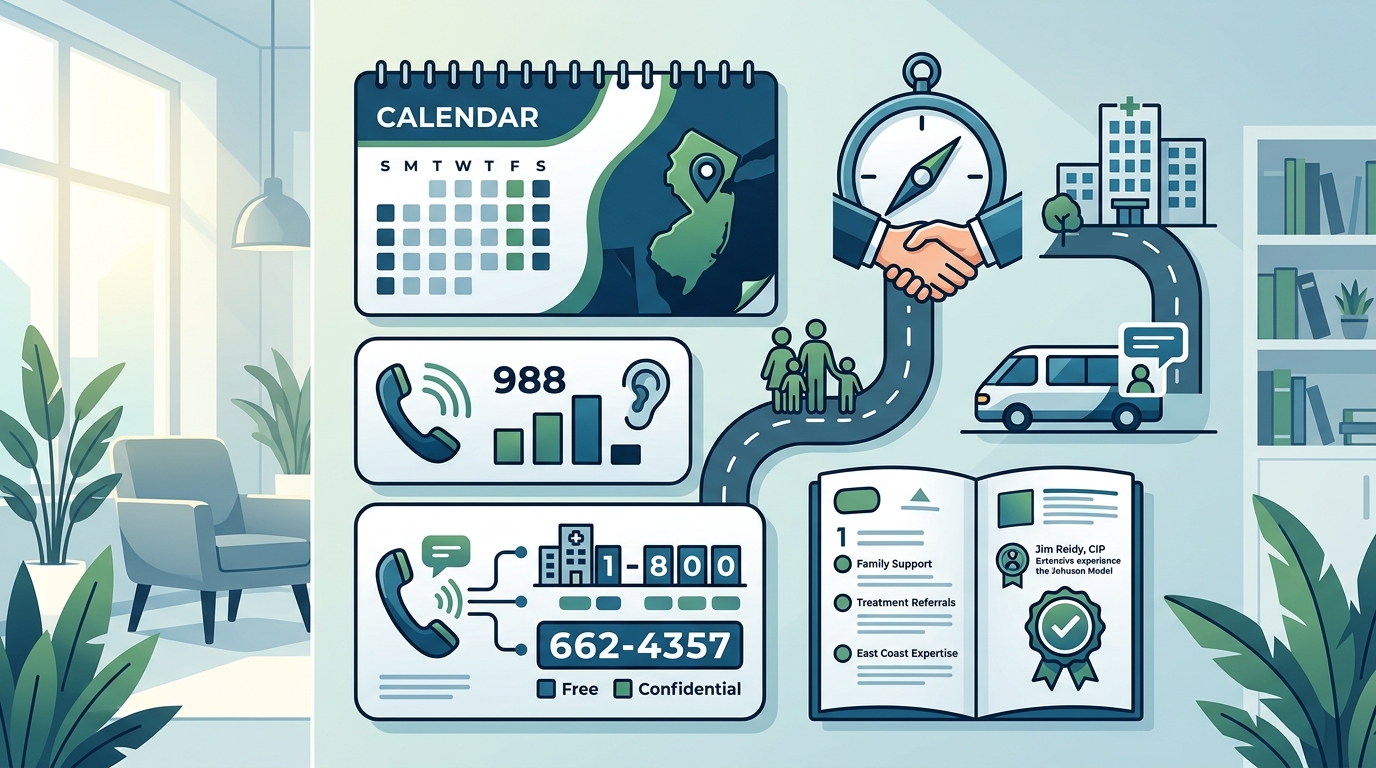
If your family member in New Jersey is struggling with addiction, you can call the 988 Suicide & Crisis Lifeline for immediate mental health support or SAMHSA's National Helpline at 1-800-662-4357 for free, confidential treatment referrals. These resources provide critical first steps before considering professional intervention services.
Immediate Crisis and Mental Health Support
For medical emergencies, such as an overdose, always call 911. Naloxone, an overdose reversal medication, is available in New Jersey, and first responders are trained to administer it. Understanding the distinction between a medical emergency and a crisis call is essential for families navigating addiction. The 988 line is not for medical emergencies, but it is a vital tool for de-escalation and connecting with local mental health resources.
Confidential Treatment Referrals and Information
Calling SAMHSA is a practical first step for families who are unsure where to begin. The helpline staff can help you understand the different levels of care, from outpatient counseling to inpatient rehabilitation. They can also provide information on insurance coverage and financial assistance options. This resource is particularly useful for families in New Jersey who want to explore treatment options before deciding on a specific facility or intervention strategy.
State-Specific Resources in New Jersey
New Jersey has its own state-level resources that complement national helplines. The New Jersey Division of Mental Health and Addiction Services provides information on state-funded treatment programs and support services. Families can access this information through the state's official website or by contacting local community mental health centers. These centers often offer sliding-scale fees and can connect families with local support groups and counseling services.
Local community resources are also important. Many cities in New Jersey, including Newark, Jersey City, and Trenton, have community-based organizations that offer addiction support services. These organizations may provide peer support, recovery housing, and job training for individuals in recovery. Connecting with local resources can help families build a support network that extends beyond the initial treatment phase. It is important to research these local options to find the best fit for your family's specific needs.
Understanding the Role of Professional Intervention
While helplines provide information and crisis support, they do not replace the need for professional intervention when a loved one is resistant to treatment. A professional intervention is a structured, planned conversation between a family and a loved one struggling with addiction, led by a trained, certified interventionist. Its goal is to move the individual from resistance into treatment. This process is different from a casual conversation or a crisis call. It requires preparation, family education, and a clear plan for treatment placement.
At Intervention 365, Jim Reidy, a Certified Intervention Professional with over 15 years of experience and more than 750 successful interventions, leads families through this process. He uses the Johnson Model, a family-centered approach that focuses on preparation, structure, and compassion. Jim's expertise in the East Coast treatment landscape ensures that families receive personalized guidance and support. If you have already tried helplines and your loved one remains resistant, a professional intervention may be the next step.
Next Steps for New Jersey Families
After contacting a helpline, the next step is to gather information and prepare your family. This includes understanding the different levels of care, identifying potential treatment facilities, and discussing boundaries with your loved one. It is also important to take care of your own mental health during this process. Addiction affects the entire family, and seeking support for yourself can help you be a better advocate for your loved one. Consider joining a support group for families, such as Al-Anon or Nar-Anon, which are available in New Jersey.
If you are considering a professional intervention, reach out to Intervention 365 for a confidential consultation. Jim Reidy and his team can help you develop a personalized plan that addresses your family's unique situation. They provide family coaching, treatment placement guidance, and professional transport to ensure a smooth transition into care. Taking these steps can help you move from crisis to action and support your loved one's journey to recovery.
Key Takeaways
- Use SAMHSA's National Helpline at 1-800-662-4357 for free, confidential treatment referrals.
- Contact 911 for medical emergencies, such as overdoses.
- Explore New Jersey state and local community resources for additional support.
- Consider a professional intervention if your loved one is resistant to treatment.
- Take care of your own mental health by joining family support groups.
- Reach out to Intervention 365 for personalized guidance and treatment placement.
Frequently Asked Questions
Is the 988 Suicide & Crisis Lifeline free to call?
Yes, the 988 Suicide & Crisis Lifeline is free to call, text, or chat. It is available 24/7 and provides confidential support for anyone in the United States experiencing a mental health or substance use crisis.
Can I call SAMHSA's helpline on behalf of my family member?
What is the difference between a crisis call and a professional intervention?
Are there state-specific helplines in New Jersey?
New Jersey has state-level resources through the Division of Mental Health and Addiction Services. These resources provide information on state-funded treatment programs and support services. You can also contact local community mental health centers for additional support.
How can I find local support groups in New Jersey?
You can find local support groups, such as Al-Anon or Nar-Anon, through SAMHSA's National Helpline or by searching online for groups in your specific city or county. Many community mental health centers also provide information on local support groups.
What should I do if my loved one refuses treatment after a helpline call?
If your loved one refuses treatment after a helpline call, consider reaching out to a professional interventionist. At Intervention 365, Jim Reidy can help you develop a personalized plan to address resistance and guide your loved one into treatment. Professional interventions are designed to break through denial and create a clear path to care.
Is Intervention 365 available in New Jersey?
Yes, Intervention 365 provides professional intervention services throughout New Jersey. Jim Reidy and his team serve families in major cities like Newark, Jersey City, and Trenton, as well as communities across the state. They offer family coaching, treatment placement, and professional transport to support your loved one's recovery journey.