

Choosing between a certified interventionist and an addiction counselor in Delaware depends on your immediate goal. If your loved one refuses treatment and you need a structured, one-time event to break through denial, a certified interventionist is the right choice. If your loved one is already willing to engage in therapy, an addiction counselor is the appropriate professional. Intervention 365, led by Jim Reidy, specializes in the former, providing the strategic planning and family coaching necessary to move a resistant individual into care.
The Certified Interventionist
A certified interventionist is a specialized professional trained to facilitate a structured, planned meeting between a family and a loved one struggling with addiction. This role is distinct from clinical therapy. The primary objective is not to treat the addiction directly, but to create a moment of clarity that leads to immediate treatment acceptance. In Delaware, where in-state treatment options can be limited, the interventionist also plays a critical role in coordinating the logistics of care.
Role and Methodology
Interventionists typically utilize the Johnson Model, a family-centered approach that emphasizes preparation, structure, and compassion. The process involves extensive pre-intervention work, including family education, boundary setting, and the creation of a unified message. The intervention itself is a calm, direct conversation where the family presents the consequences of the addiction and offers a specific path to treatment. It is not a confrontation or a shouting match; it is a strategic presentation of facts and love.
Strengths and Limits
The primary strength of a certified interventionist is their ability to manage high-emotion, high-stakes family dynamics. They provide the structure that families often lack when trying to reason with a loved one in denial. However, their role is limited to the intervention and the immediate transition to treatment. They do not provide long-term therapy, clinical diagnosis, or ongoing counseling. For families in Delaware, an interventionist like Jim Reidy, who has over 15 years of experience and has led more than 750 interventions, offers the expertise to navigate complex family systems and secure appropriate placement in facilities such as those in Pennsylvania or New Jersey when local options are insufficient.
The Addiction Counselor
An addiction counselor is a licensed mental health professional who provides ongoing therapy and clinical support to individuals struggling with substance use disorders. This role is therapeutic in nature, focusing on the psychological, emotional, and behavioral aspects of addiction. Counselors work with clients to develop coping strategies, address underlying trauma, and maintain long-term sobriety.
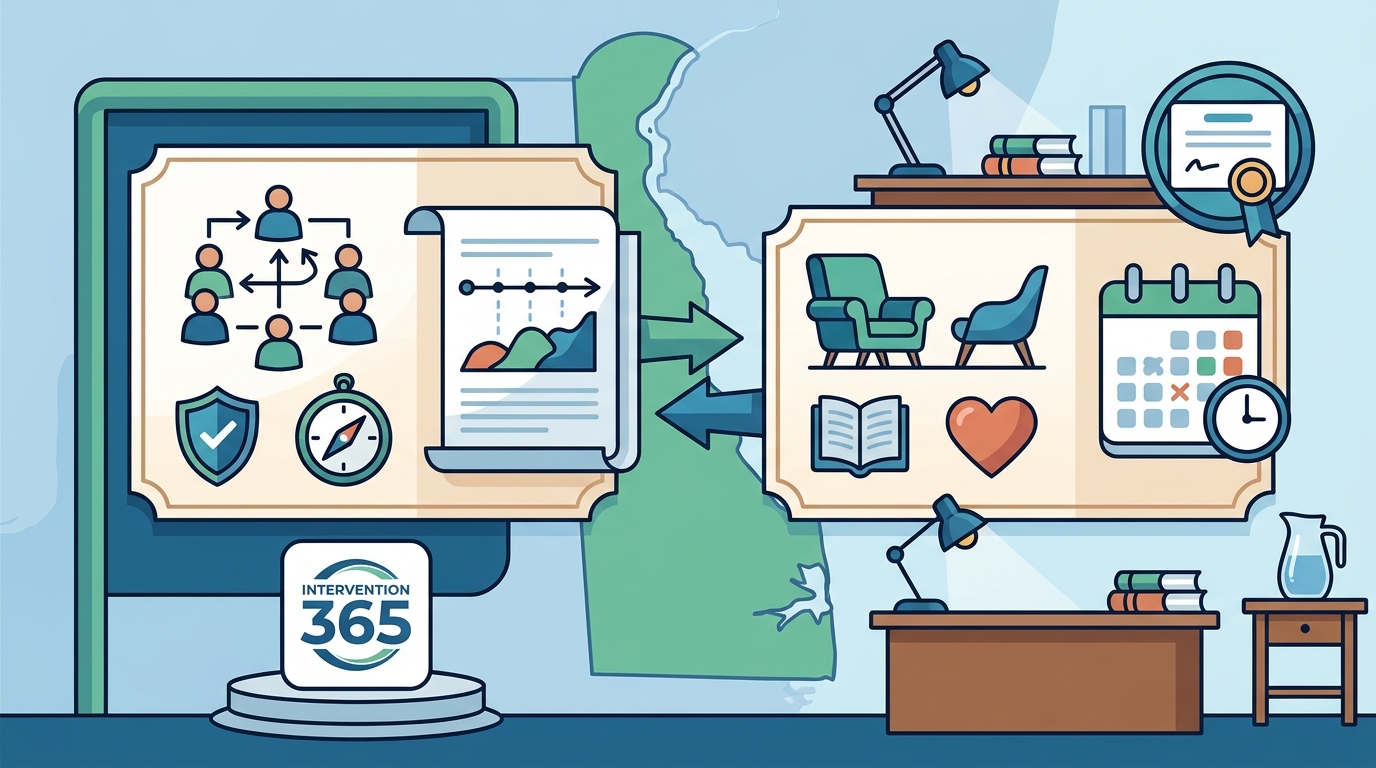
Role and Methodology
Unlike the one-time event of an intervention, counseling is a continuous process. It requires the client's willingness to engage in therapy. Counselors use various therapeutic modalities, such as Cognitive Behavioral Therapy (CBT) or Dialectical Behavior Therapy (DBT), to help clients understand the root causes of their addiction. They provide a safe space for clients to process emotions and build a support network. In Delaware, addiction counselors are often found in outpatient clinics, residential treatment centers, and private practices.
Strengths and Limits
The strength of an addiction counselor lies in their ability to provide deep, long-term healing and clinical care. They are essential for the recovery process once an individual has entered treatment. However, their limit is that they cannot effectively engage a client who is in active denial or refuses to attend sessions. If a loved one is resistant to help, a counselor cannot force the conversation or create the structured environment necessary to break through that resistance. Therefore, counseling is the next step after an intervention, not a replacement for it when treatment is being refused.
Comparison Table
| Criteria | Certified Interventionist | Addiction Counselor |
|---|---|---|
| Primary Goal | Break through denial to secure treatment entry | Provide ongoing therapy and clinical support |
| Client Willingness | Works with resistant or unwilling individuals | Requires willing and engaged clients |
| Duration | One-time event with pre/post support | Long-term, ongoing sessions |
| Clinical Scope | Non-clinical; focuses on family dynamics and planning | Clinical; provides diagnosis and therapy |
| Delaware Logistics | Coordinates transport and placement across state lines | Provides local or remote therapeutic services |
| Best For | Families in crisis where treatment is refused | Individuals already in or entering treatment |
Decision Guidance
Choose a Certified Interventionist If...
You should choose a certified interventionist if your loved one is actively using substances and refuses to seek help. This is the case when conversations have turned into arguments, promises are broken, and the family is exhausted. Intervention 365, based in the East Coast region, provides the professional leadership needed to stop the cycle of enabling and create a clear path to care. Jim Reidy, a Certified Intervention Professional (CIP #10266), offers direct access to his expertise, ensuring that the family is prepared and the treatment plan is in place before the meeting occurs. This option is suitable for families in Delaware who need to coordinate care with facilities in neighboring states like Pennsylvania or New Jersey, where Intervention 365 has strong placement networks.
Choose an Addiction Counselor If...
You should choose an addiction counselor if your loved one is already willing to engage in therapy or has recently entered a treatment program. This is the appropriate step for maintaining sobriety, processing trauma, and building long-term coping skills. If the immediate crisis of denial has been resolved, a counselor provides the clinical foundation for recovery. For families in Delaware, this may involve local outpatient services or residential programs where counseling is a core component of the treatment plan. The counselor's role is to support the individual's journey after the intervention has successfully opened the door to care.
Frequently Asked Questions
Can an interventionist provide therapy?
No, a certified interventionist does not provide clinical therapy or counseling. Their role is to facilitate the intervention and coordinate the transition to treatment. Once the individual is in care, they will work with licensed addiction counselors and clinicians for ongoing therapeutic support.
What is the Johnson Model?
The Johnson Model is a structured, family-centered intervention approach that emphasizes preparation, compassion, and accountability. It involves a planned meeting where the family presents the impact of the addiction and offers a specific treatment plan, rather than a spontaneous confrontation.
How does Intervention 365 help families in Delaware?
Intervention 365 provides professional intervention services throughout Delaware, including New Castle, Kent, and Sussex counties. Jim Reidy leads the process personally, offering family coaching, treatment placement guidance, and professional transport to ensure the loved one is safely moved into care, often coordinating with facilities in Pennsylvania or New Jersey.
Is an intervention a one-time event?
The intervention itself is a one-time event, but the process includes significant preparation before and support after. The goal is to create a lasting change in the family's approach to the addiction, but the individual's recovery requires ongoing treatment and counseling.
What if my loved one says no during the intervention?
If the loved one refuses treatment, the interventionist helps the family establish and maintain healthy boundaries. The plan for refusal is part of the preparation, ensuring the family knows how to respond without enabling the addiction. The door to treatment remains open, and the family continues to support each other through the process.
How do I find a certified interventionist in Delaware?
To plan your visit, contact our team to speak with Jim Reidy, a Certified Intervention Professional with over 15 years of experience. He is available 24/7 for confidential consultations and can guide you through the process of planning an intervention in Delaware or coordinating care across the East Coast. Learn more: Contact Alcohol Intervention with.